
{主关键词}
僵尸先生
대법, '서부지법 폭동' 5명에 11억 손배소 제기..."법원 귄위 심각 훼손"_我的网站

一 |
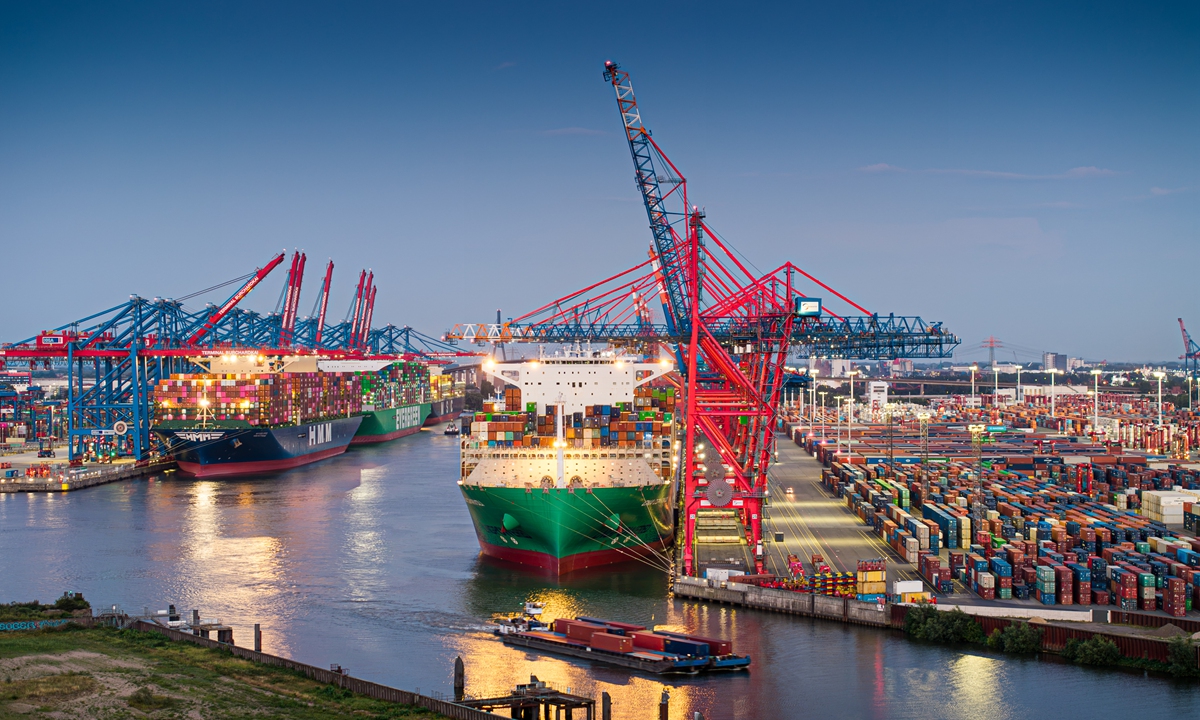
German exports to China fell year-on-year in the first half of 2026, pointing to a deeper restructuring of bilateral trade as China moves up the manufacturing value chain, Chinese analysts said. They also cautioned that the decline should not be read as diminishing China's importance to German businesses, given the deep economic ties and the continued benefits of cooperation for both sides.
Germany's first-half exports to China fell by more than 12 percent year-on-year to just under 37 billion euros ($43 billion), while imports from China rose 8.9 percent to 91.8 billion euros, according to data from Germany Trade & Invest (GTAI) cited by Reuters on Sunday. Germany's trade deficit with China widened to about 55 billion euros from 40 billion euros a year earlier, the report said.
Reuters cited Corinne Abele, GTAI's East Asia expert, as pointing to weaker domestic demand and the fact that German companies are increasingly producing inside China.
Commerzbank economist Vincent Stamer said that China's diminishing reliance on Germany showed that the country is becoming more independent of Western powers and catching up technologically, according to Reuters.
China has continued to strengthen its capabilities in sectors including new-energy vehicles, artificial intelligence and advanced manufacturing, enabling more products and technologies that previously depended on imports to be supplied domestically, Zhao Junjie, a senior research fellow at the Institute of European Studies at the Chinese Academy of Social Sciences, told the Global Times on Sunday.
"This means the structure of China-Germany trade is changing," Zhao said, noting that as Chinese industries move up the value chain, China's reliance on some German industrial products is declining, while Chinese companies are becoming more competitive in sectors where German manufacturers traditionally enjoyed strong advantages.
In a position paper released on July 28, China's Ministry of Commerce (MOFCOM) said that the rapid growth of China's modern industries is driven by innovation, with nationwide research and development (R&D) spending growing by an average of 10 percent annually during the 14th Five-Year Plan (2021-25) period.
The changing trade trend is also linked to Germany's own industrial competitiveness and policy environment, Zhao said, noting that high energy costs, demographic pressures and slower investment in some emerging technologies have weighed on the country's industrial upgrading and innovation.
At the same time, political and security considerations have increasingly shaped Germany's economic policy toward China, as Berlin has moved closer to the broader US and EU "de-risking" agenda, Zhao said.
"Such policies can be a double-edged sword, raising costs for German companies in China and disrupting bilateral economic cooperation while seeking to pressure Chinese industries."
However, it is notable that overall China-Germany trade remained substantial. Total bilateral trade exceeded 128 billion euros in the first half, about 3 billion euros more than Germany's trade with the US, according to Reuters.
China overtook the US as Germany's top trading partner in 2025 after US President Donald Trump launched sweeping protectionist tariffs that weighed on German exports to the US.
Falling German exports should not be seen as diminishing China's importance to German businesses, especially as bilateral ties are increasingly expanding beyond trade into investment, local production and R&D, analysts said.
German companies invested more than 7 billion euros in China in the first 11 months of 2025, up 55.5 percent from 4.5 billion euros in 2024 and 2023 and hitting a four-year high. German companies are bulking up their China business and adopting "China for China" production strategies partly to reduce exposure to possible tariffs and export restrictions, according to Reuters.
Major German companies are also deepening their presence in China. BASF's Verbund site in Zhanjiang, South China's Guangdong Province went fully operational in March with an investment of 8.7 billion euros, the largest single investment project wholly owned by a German enterprise in China, the Xinhua News Agency reported.
"China and Germany have developed deeply intertwined economic interests over many years," Zhao said. Rather than treating stronger Chinese industries as a reason to reduce cooperation, Germany should adapt to a relationship in which competition increasingly coexists with investment, innovation and industrial collaboration, he noted.
Recent high-level exchanges have also underscored the importance both sides attach to economic ties. During a meeting with German Economy Minister Katherina Reiche in May, Chinese Vice Premier He Lifeng said that China and Germany are important economic and trade partners with a solid foundation, enormous potential and strong complementarity, calling on both sides to consolidate cooperation in traditional sectors and tap opportunities in emerging fields, according to the Xinhua News Agency.
Reiche said that the German business community remained confident about China's economic prospects and innovation capabilities and would continue to deepen cooperation, Xinhua reported.
The two sides have also moved to strengthen institutional mechanisms. China and Germany agreed to restart the China-Germany Joint Economic Committee and establish two new working groups on trade and investment and industrial cooperation, according to the MOFCOM.
。 유죄판결 확정 5명 상대로 약 11억원 손해배상소송 제기 대법 "헌정 질서 문란, 사법부 독립 위협...법적 책임 반드시 물어야" ◆…지난 1월 19일 서부지법에서 청사 관계자들이 파손된 시설물과 물품 등을 치운 뒤 복구 작업을 하고 있다. (사진=연합뉴스) 대법원이 지난해 1월 서울서부지법 청사에 난입해 기물을 파손하는 등 '폭동 사태'에 가담했던 이들을 상대로 피해복구 비용 11억원을 배상하라는 민사소송을 냈다. 대법원 법원행정처는 26일 '서부지법 폭동 사태'에 가담해 유죄판결이 확정된 5명을 상대로 물적 피해로 인한 복구비용 11억7589만9770원과 지연손해금을 구하는 손해배상청구 소송을 서울중앙지법에 제기했다고 밝혔다. 원고는 대한민국이고, 소관청은 법원행정처다. 법원 관련 국가소송 업무를 지원하는 직무소송 지원센터에서 사전에 법리적인 검토를 거쳐 소송을 제기했다고 법원행정처는 설명했다. 서울서부지법 폭동사태는 지난해 1월19일 오전 3시께 윤석열 전 대통령에 대한 구속영장이 발부되자 이에 반발한 지지자들이 서부지법에 난입해 법원 청사 안에 있는 기물들을 파손하는 등 난동을 일으킨 사태다. 법원행정처는 "서울서부지법 청사는 유리창과 출입문, 외벽, 내부 사무실 집기와 전산설비 등 다수 시설물이 심각하게 파손되고 소속 공무원들은 심각한 정신적 충격을 받았다"며 소송 이유를 설명했다. 이어 "이는 국가의 사법 작용이 이뤄지는 법원 청사에 대한 집단적 폭력·파괴 행위로서, 단순한 기물 파손이나 폭력행위를 넘어 국민의 기본권 수호와 법치주의의 최후 보루인 법원의 기능과 권위를 심각하게 훼손한 중대한 불법행위"라고 했다. 그러면서 "헌정 질서를 문란케 하고 사법부의 독립을 정면으로 위협했으며, 법치주의와 민주주의의 근간을 뒤흔든 중대한 사건인 이 폭동에 가담한 사람들에 대해 법적 책임을 묻는 것은 반드시 필요하다"고 강조했다. 검찰은 지난해 2월 10일 서부지법 난동 사태 가담자 63명을 최초로 재판에 넘겼다. 이후 추가 기소된 인원을 합하면 128명에 이른다. 최초로 기소된 63명 중 1~5년의 징역형이 44명, 징역형의 집행유예가 17명, 벌금형 2명 등이다. 대법원은 지난 4월 항소 또는 상고를 포기·취하한 인원을 제외한 18명에 대해 징역형의 실형 또는 집행유예를 선고한 원심을 확정했다.。
Current article:http://8oexz.longdachemakuanshan.pics/news/20260826_315113.html
Published on:09:55:47
- 上一篇:一双草鞋忆长征
- 下一篇:网站安全防护指南:防DDoS、防CC、防SQL注入
- 284260长沙楼市“以旧换新”政策落地 被认为是长沙全面取消楼市限购的标志
- 22274小米产品总监:未来小米8不会有这么便宜的价格。
- 6703065美团外卖订单金额不符说好的大额补贴没了
- 111从“摆渡船”到5分钟穿黄,济南黄岗路黄河隧道通车首日获市民点赞
- 903855哈萨克斯坦库鲁尔泰选举顺利举行 中方回应
- 93019电影网站如何变现?合规运营与盈利模式全解析
- 681528NBA季后赛:库里31+6勇士大胜火箭1-0 范格34中7巴特勒25+7
- 2789079商业综合体连通地铁站 地下商街全面升级焕新
- 337307阿里七年来最大的资本运作
- 54155走进身边的体彩特色实体店,遇见夏末的小惊喜
- 735624“特朗普竞选团队正积极考虑黑利作为竞选搭档”,法新社点名可能人选
- 57762025年淘宝京东618哪一天买比较优惠便宜划算?从6月17日晚20点到6月18日全天最便宜
- 9823533享受退役生活了!威少携家人前往伦敦旅游度假 与妻子甜蜜合照
- 22093山西晋中市能源局党组成员、副局长王爱青接受审查调查
- 1982外交部:敦促日本以实际行动为中日正常交流创造必要条件
- 142601李强会见约旦国王阿卜杜拉二世
- 115222026年Q2全球手机畅销榜公布:苹果霸榜 iPhone 17稳居第一
- 9155党建引领出实招 基层治理有温度——兴城市关注特殊群体细致入微
- 6152790南昌景区周边特色打卡美食 一站式夜宵大排档如何选
- 793黄岩岛风波再起,中国要彻底解决问题,恐怕只有一招
- 7603795本周你可能错过的13部电影、游戏及电视预告片
- 5102Two Girls Die Due to TikTok ‘Blackout Challenge’, Parents Sue
我的网站热门国内
- Copyright @ 2016-2017 我的网站 版权所有